Why Working Harder Isn’t the Answer to Financial Freedom
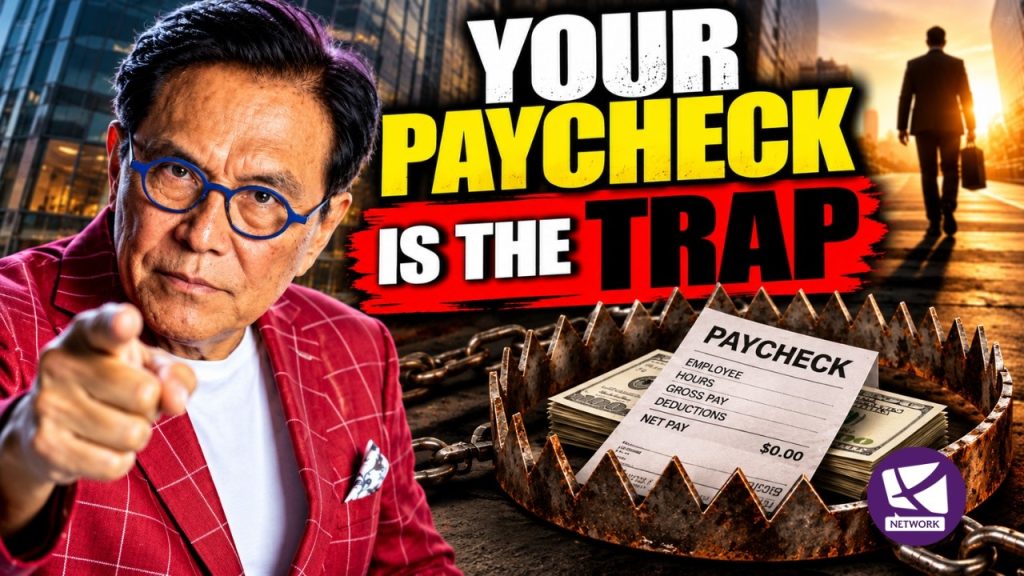

What are the money habits that keep you poor? According to Robert Kiyosaki, some of the biggest obstacles to financial freedom are the very habits most people learn to trust: getting good grades, saving money, working for a paycheck, avoiding debt, and following traditional financial advice.
In this episode of The Rich Dad Radio Show, Robert challenges five conventional money beliefs that he argues can keep people financially dependent—even when they work hard, save consistently, and follow the rules.
His message is especially relevant during periods of economic uncertainty, when fear can cause people to cling even tighter to familiar financial habits.
Robert opens with a provocative idea: Sometimes the things you believe are keeping you financially safe are actually holding you back.
He explains why financially educated investors approach money differently and why changing your financial future often begins with questioning what you were taught.
1. Stop Confusing Good Grades With Financial Intelligence
Traditional education rewards students for memorizing answers and following instructions. But Robert argues that academic achievement doesn’t automatically translate into financial intelligence. Understanding assets, liabilities, cash flow, and investing requires a different kind of education.
2. Stop Relying on Saving Money to Build Wealth
Robert revisits one of his most controversial Rich Dad principles: “Savers are losers.”
His argument isn’t that everyone should abandon savings. It’s that saving money alone doesn’t teach you how to acquire income-producing assets or protect your purchasing power from inflation.
3. Stop Depending Entirely on Earned Income
Most people spend their lives working for a paycheck. Robert explains why he believes investors should focus on converting earned income into passive and portfolio income.
He discusses how businesses, real estate, and paper assets can potentially generate income without requiring the owner to continually trade time for money.
4. Stop Believing All Debt Is Bad
Robert challenges the conventional advice to avoid borrowing.
He distinguishes between bad debt, which finances liabilities that take money out of your pocket, and good debt, which can help acquire income-producing assets.
But borrowing creates obligations and risk. The financial lesson is to understand what you’re purchasing, whether it generates sufficient cash flow, and how debt affects your financial position.
5. Stop Blindly Following Financial Experts
Robert questions whether investors should rely entirely on brokers, planners, and other financial professionals to make their decisions.
He encourages listeners to understand how advisors receive compensation, question conventional recommendations, and develop the financial education necessary to evaluate opportunities independently.
Throughout the episode, Robert explains why he and Kim Kiyosaki have approached financial crises differently from conventional investors, including purchasing a 300-unit apartment building during a market downturn.
The larger lesson isn’t that every investor should take on debt, buy real estate, or reject traditional investments.
It’s that financial freedom requires more than following familiar rules. It requires understanding money, recognizing risk, and developing the ability to make informed financial decisions.
Robert’s challenge is simple: Are your financial habits helping you acquire assets and build cash flow—or are they keeping you dependent on the next paycheck?
00:00 Savers Are Losers
00:48 Monkey Trap Mindset
02:53 Five Money Moves
03:39 Crash Day Contrarian Buy
08:19 Move Three Paycheck Trap
10:48 Move Four Smart Debt
16:06 Move Five Fire The Experts
19:18 Let Go For Freedom
21:00 Final Thanks And Outro
—–
Disclaimer: The information provided in this video is for educational and informational purposes only. It should not be considered as financial advice or a recommendation to buy or sell any financial instrument or engage in any financial activity.
The content presented here is based on the speaker’s personal opinions and research, which may not always be accurate or up-to-date. Financial markets and investments carry inherent risks, and individuals should conduct their own research and seek professional advice before making any financial decisions.