Robert Kiyosaki: Why Rising Interest Rates Could Be the Rich’s Next Big Opportunity
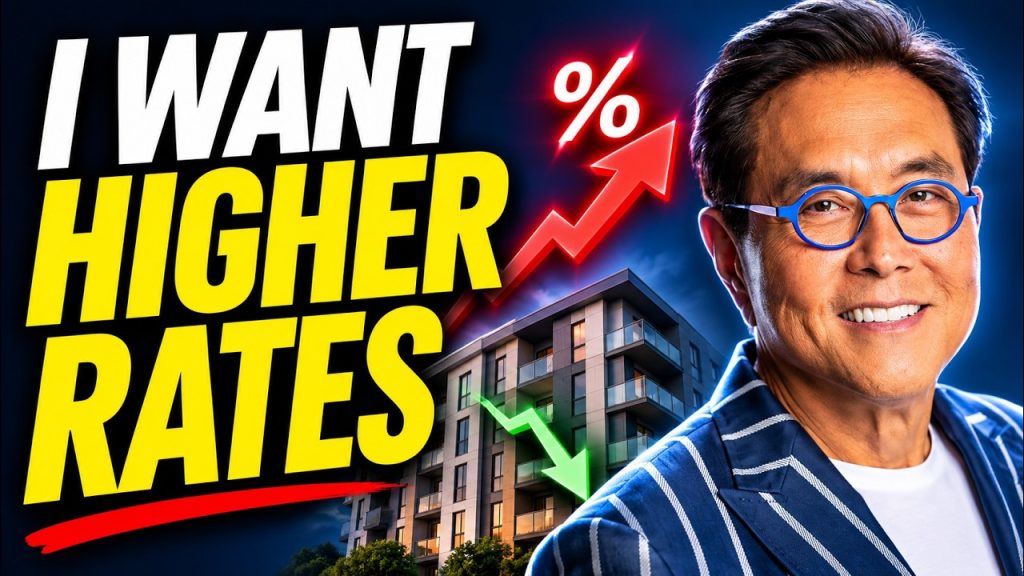

Understanding how to invest when interest rates rise requires looking beyond asset prices and focusing on cash flow, borrowing costs, and an investment’s ability to generate income.
Most people hear that interest rates are rising and immediately think about higher mortgage payments, more expensive debt, falling property values, and declining investment opportunities.
Robert Kiyosaki sees something different.
He sees an opportunity.
In this episode of The Rich Dad Radio Show, Robert Kiyosaki, best-selling author of Rich Dad Poor Dad, explains why rising interest rates can expose weaknesses in conventional investment strategies while creating opportunities for financially educated investors.
For years, inexpensive borrowing encouraged people to purchase real estate, stocks, and other assets with the expectation that prices would continue rising.
But what happens when borrowing costs increase, refinancing becomes more difficult, and buyers disappear?
Robert challenges the assumption that owning an asset automatically makes someone an investor. He explains why he distinguishes between people who depend on rising asset prices and those who prioritize cash flow.
And that distinction becomes increasingly important when money becomes more expensive.
Drawing on lessons from his rich dad, Robert revisits one of the most misunderstood concepts in financial education: the difference between good debt and bad debt.
He shares a childhood lesson involving a Monopoly board that fundamentally changed how he understood borrowing, asset ownership, and building wealth using other people’s money.
Robert also reveals the question he asks before considering an investment—a question that becomes particularly important when interest rates rise.
Rather than focusing exclusively on borrowing costs or predicting future property values, he explains how he evaluates an asset’s ability to generate income, service its debt, and produce positive cash flow.
But identifying an investment opportunity is only part of the equation.
Will a bank lend you the money when credit becomes harder to obtain?
Robert explores the importance of financial credibility, understanding financial statements, building relationships with lenders, and demonstrating that an investment can support its financial obligations.
He also shares what he and Kim Kiyosaki did during the 2008 financial crisis while many investors were selling assets and retreating from the market.
Their approach illustrates why Robert believes financial preparation matters more than trying to predict the next economic downturn.
In this episode, you’ll discover:
– Why rising interest rates can expose speculative investments.
– How to distinguish between good debt and bad debt.
– Why Robert prioritizes cash flow over capital gains.
– The question Robert asks before considering an investment.
– How higher borrowing costs can create motivated sellers.
– Why financial education and credibility matter when securing financing.
– How Robert and Kim approached investing during the 2008 financial crisis.
For real estate investors, entrepreneurs, and anyone looking to build wealth beyond a traditional paycheck, this episode challenges conventional thinking about debt, interest rates, and economic uncertainty.
You cannot control interest rates. You cannot control the Federal Reserve. And you cannot control what happens to asset prices.
But you can improve your financial education, strengthen your ability to evaluate investments, and prepare yourself for changing economic conditions.
The difference between fearing an economic downturn and recognizing a potential opportunity begins with knowing how to evaluate the numbers.
00:00 Rates Wipeout Warning
00:59 Investors Versus Gamblers
03:45 How Cheap Money Built Bubbles
08:24 Debt Tool Good Versus Bad
09:38 Monopoly Lesson: Who Pays
11:28 One Question Every Deal
14:00 Bargains When Rates Rise
18:04 Credibility Sets Your Rate
19:35 2008 Shopping During Crash
20:58 Next Sale Be Ready
—–
Disclaimer: The information provided in this video is for educational and informational purposes only. It should not be considered as financial advice or a recommendation to buy or sell any financial instrument or engage in any financial activity.
The content presented here is based on the speaker’s personal opinions and research, which may not always be accurate or up-to-date. Financial markets and investments carry inherent risks, and individuals should conduct their own research and seek professional advice before making any financial decisions.