The ‘landmark’ role Chicago played in U.S. labor relations
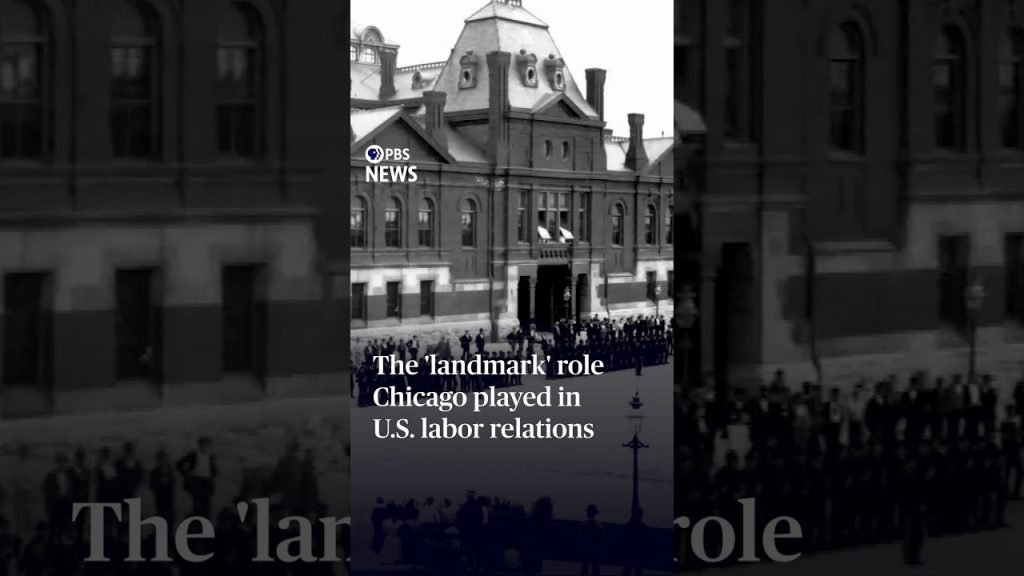

During the Gilded Age, people started “to look to a place like Chicago and say, that’s the future. That’s the future of America,” Pulitzer Prize-winning historian Beverly Gage told Judy Woodruff.
Gage added that people saw places like Chicago — “new, energetic, fast-growing industrial cities” — as the future of modern civilization.
“They’re also looking to Chicago to say, wow, the problems that are emerging in Chicago — class conflict, poor housing, pollution, homelessness, employment insecurity — those are going to be the problems that are going to really define modern society,” she said.
Nowhere was one of those problems — class conflict — on greater display than in Pullman, the Chicago neighborhood where luxury railcars by the same name were manufactured.
For her latest book, Gage traveled across the country, exploring the people, places and turning points that have shaped America over its 250-year history. Judy Woodruff joined Gage for part of that journey for her series, Crossroads: America at 250.
Watch PBS News for daily, breaking and live news, plus special coverage. We are home to PBS News Hour, ranked the most credible and objective TV news show.
Sign up for Here’s The Deal with Lisa Desjardins: https://to.pbs.org/41q6E8i
Subscribe for exclusive content in our newsletters: https://www.pbs.org/newshour/subscribe
PBS News podcasts: https://www.pbs.org/newshour/podcasts
Stream your PBS favorites with the PBS app: https://to.pbs.org/2Jb8twG
Find more from PBS News at https://www.pbs.org/newshour
Subscribe to our YouTube channel: https://bit.ly/2HfsCD6
Follow us:
TikTok: https://www.tiktok.com/@pbsnews
X: http://www.twitter.com/newshour
Instagram: http://www.instagram.com/newshour
Facebook: https://www.facebook.com/newshour/